
Model-Based Inventory vs. Unit-Based Listings
Most dealers and third-party marketing vendors assume inventory works at the unit level. Our websites (like most websites) do not work that way.
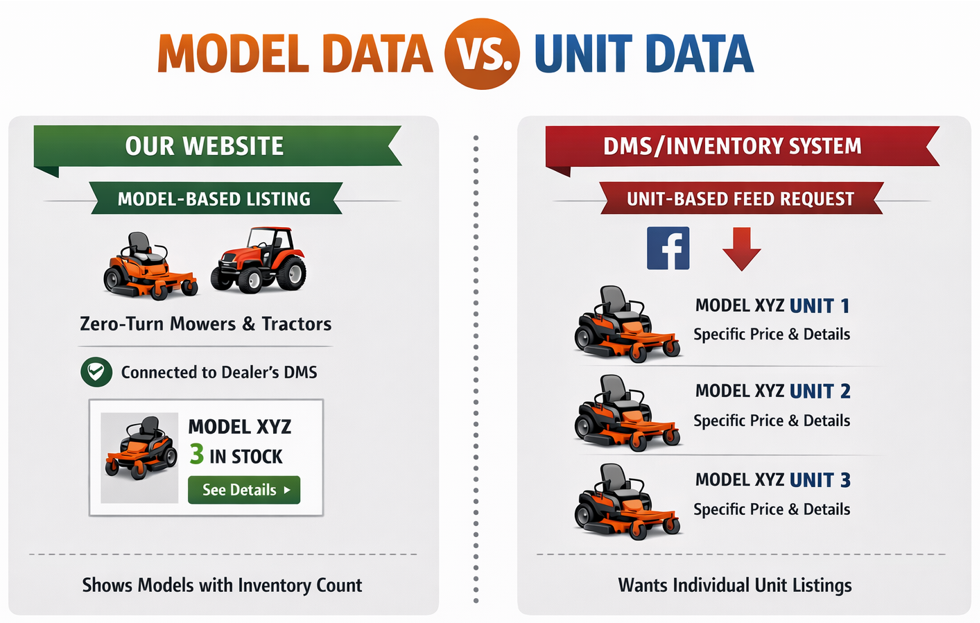
Our platform is built around model-based inventory. That means each product page represents a model of mower or tractor, while the inventory connection shows how many of that model are currently in stock from the dealer’s DMS.
This is why the feed we can provide reflects models and inventory counts, not individual units with separate pricing, serial numbers, or unit-specific details.
How Our Website Works:Each listing on the website represents a single model, not every individual machine on the lot.
In plain English: if a dealer has three units of the same mower model, the website shows one model page with a quantity of three in stock. |
What a Facebook Feed Vendor Typically Expects:Facebook marketing platforms and outside feed vendors often expect unit-level inventory data.
That means they are expecting something more like: Model XYZ – Unit 1, Model XYZ – Unit 2, and Model XYZ – Unit 3. |
The Key Difference
The website is structured around models. The requested Facebook feed is structured around units.
That is not a minor formatting difference. It is a completely different data structure.
What We Can Provide
|
What We Cannot Provide From This Website Structure
|
Bottom Line
Our websites are designed to display and market models with inventory counts, not to function as unit-level inventory feeds.
If a dealer wants a feed for Facebook that includes each individual machine as its own listing, that requires a unit-based inventory system and feed structure that is different from how this website platform is built.