
Beware of Domain Name Registrar Imposters: Two Common Mail Scams You Should Know
If you own a domain name, you’re a target for scammers — especially the ones who send official-looking letters through regular mail. These letters look urgent, professional, and time-sensitive, but they’re designed for one thing: to get you to panic and send a check.
There are two main versions of this scam:
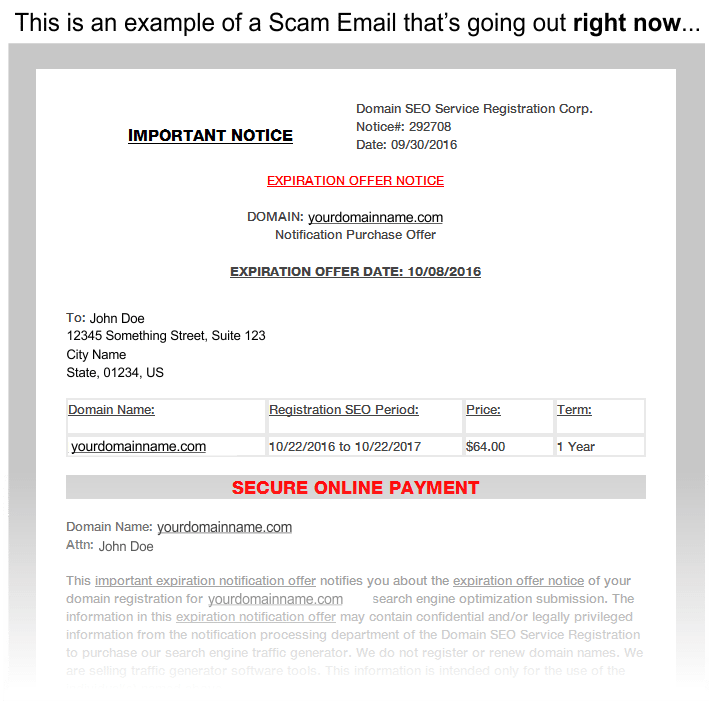
1. Fake Domain Renewal Notices
Scammers mail letters that look like legitimate renewal invoices from a domain registrar. They often use wording like “Final Notice,” “Renew Immediately,” or “Service Expiration.”
The problem?
They’re not your registrar.
If you send a check, you’re paying an imposter — and your real domain does not get renewed. People usually find out only when their website goes down later because nothing was ever renewed in the first place.
 |
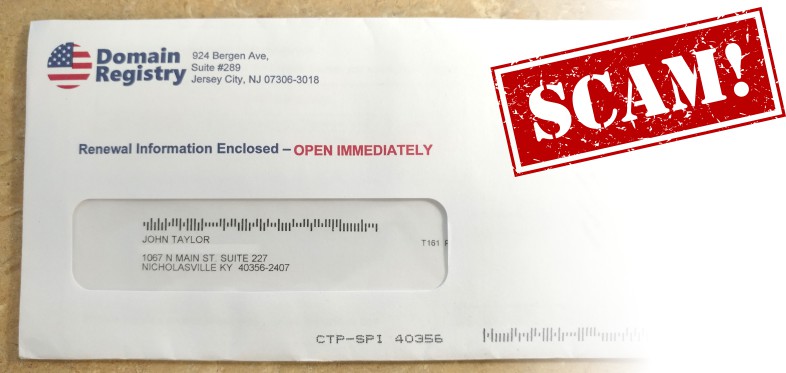
2. “Directory Registration” or “Listing Service” LettersThis version pretends to be a required listing or registration fee to keep your domain in some “national registry,” “internet directory,” or “website index.” Why These Scams WorkBoth rely on the same tactic: pressure. They use short deadlines, bold warnings, and a formal layout to make you think it’s legitimate. Business owners are busy, so it’s easy for one of these to slip through unnoticed. |
How to Protect Yourself
|
 |
Final Thoughts
Your domain is too important to risk losing. Scammers count on confusion and urgency, but once you know what these letters look like, they’re easy to spot. If you ever receive a suspicious notice, double-check it before acting, and feel free to reach out to us anytime for help confirming whether it’s real, that’s what we’re here for!